
The Difference Between a Lead and a Prospect — And Why It Matters

Stuart Bontrager
Sales is more than just closing deals. It’s about understanding how people discover your brand, what convinced them to book a demo with you, and why they decided to invest in your solutions. But to understand how your sales pipeline came to be, your sales reps must understand the difference between a lead and a prospect, as it sets the foundation for how to approach and optimize your sales process.
In this post, we’ll walk you through what a sales lead is, what a sales process is, and the key role of a BDR in connecting the two.

Download the Ultimate B2B Appointment Setting Guide
Don’t have time to read the whole guide right now? Download the PDF version of the guide.
What is a sales lead?
A sales lead is an individual who has shown some interest in your solution but has not been evaluated for fit. They are at the beginning of the buyer’s journey and are considered at the top of the sales funnel.
A lead can come from a wide range of sources, including:
- A gated piece of content
- A contact from a sales prospect list
- A business card collected at a trade show
- A form fill from a paid marketing campaign
EBQ Tip
We highly recommend investing in a customer relationship management (CRM) system, like Salesforce, that tracks your leads and monitors sales progress at every stage. With clear visibility into performance, it becomes easier to identify which inbound and outbound efforts are driving the most closed deals — and use those insights to shape more effective campaigns moving forward.
What is a sales prospect?
A sales prospect is a qualified lead, as a business development representative (BDR) has assessed and verified that the lead matches your ideal customer profile (ICP). Unlike leads, prospects have gone through the buyer’s journey and are lower in the sales funnel.
So, how does a BDR qualify a lead? In short, they’ll have to:
- Study the lead qualification system
- Isolate actively engaged prospects with a preliminary score
- Reach out with prospects and assign new scores
- Follow up with prospects and readjust scores
- Repeat until the prospect is determined to be a good fit now or a bad fit in general
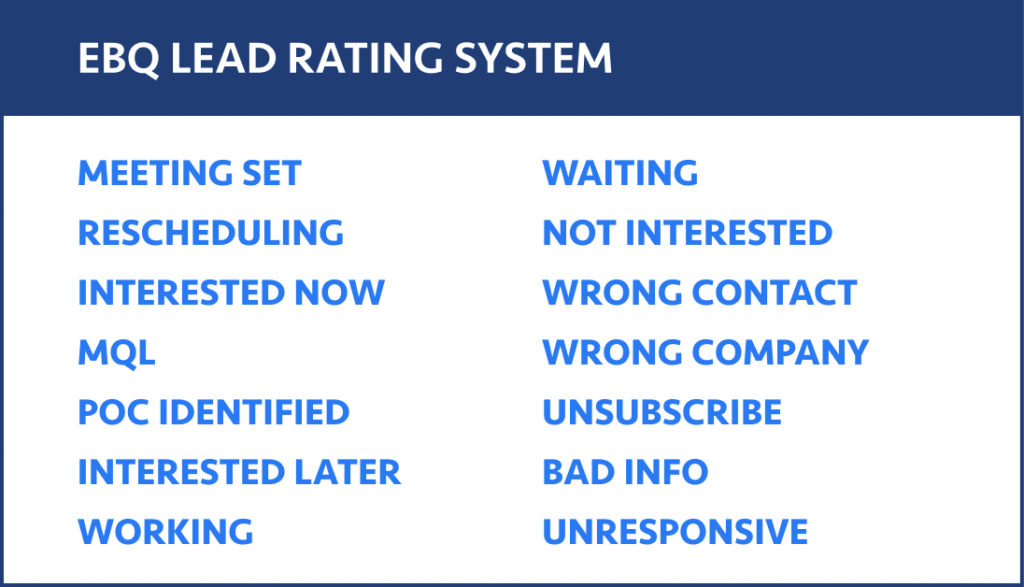
Traditional lead qualification systems, such as BANT, typically focus on high-level fit. However, one of the biggest mistakes we see salespeople make is not scoring prospects based on level of purchasing intent.
This is where the EBQ Rating comes into play. The infographic below shows how we score prospects based on their readiness for a sales demo call — not just on how the lead meets your overall ICP requirements.
Sales Lead vs Prospect: A High-Level Comparison
Now that we’ve defined what sales leads and prospects are, let’s compare them side by side to understand their differences.
| Dimension | Lead | Prospect |
|---|---|---|
| Definition | Unvetted contact showing initial interest | Qualified customer who matches your buyer persona |
| Qualification | Not yet screened | Screened by a BDR |
| Sales Stage | Top of the Funnel | Middle of the Funnel |
| Intent Level | Unknown or Low | Confirmed and measurable |
| Team’s Responsibility | Marketing or SDR | Account Executive or Inside Sales Rep |
| Next Action | Lead nurturing, outreach, and lead qualification | Sales appointment, demo, and proposal |
| CRM Lead Status | Contact or MQL (marketing-qualified lead) | SQL (sales-qualified lead) or SQO (sales-qualified opportunity) |
4 Common Qualification Mistakes
Even the most prepared and experienced sales team can fall into traps that blur the line between a lead and a prospect. As a result, your team could be chasing down the wrong leads, sales velocity slows, close rates drop, and overall morale and productivity follow.
Here are four general red flags to look for when converting leads into prospects:

Treating all inbound leads as prospects: Not every inbound contact is qualified. Someone may have downloaded your ebook, but has no intention or decision-making power to buy.

Skipping the lead qualification process: Many BDRs often focus on the quantity of sales meetings they book, disregarding how interested their leads are in the sales call.

No clear lead handoff process: Without a defined procedure, leads will fall through the cracks between sales and marketing.

Relying on AEs to do their own prospecting: Your AEs should be focused on closing, not cold calling lists. By asking AEs to prospect on their own, you’re merely taking away the time they could have spent following up on opportunities that could convert to revenue.
Download the Ultimate B2B Appointment Setting Guide
Learn what it takes to identify prospects, get in touch with decision-makers, and set more meetings for your sales reps.
TLDR: Lead vs Prospect
In short, a lead is a person who has merely expressed awareness of your brand. After a BDR assesses the lead and determines there is a high likelihood that the lead will become a paying customer, the lead then graduates to a qualified prospect.
We often advise a BDR to facilitate the lead-to-prospect conversion, as they are responsible for the first quarter of the sales cycle. Not only can they handle cold outreach, but a BDR can also qualify leads by assessing a contact against your lead qualification system. From there, they can follow up with a prospect to get them interested in a sales call.
The fastest way to accelerate this process? Hiring EBQ’s appointment setters, who will qualify your leads, handle outreach, and book sales-ready meetings directly onto your sales team’s calendar. We take our proven sales development processes and customize them to ensure we reach the right people with the right messaging.
About the Author:
Stuart is one of EBQ’s Revenue Consultants with over 20 years of experience in Sales. His tenure as the VP of Sales sharpened his expertise in translating business visions into lead-generation tactics.