
The Psychology of Customer Loyalty: 7 Steps to Creating Brand Advocates


Dalia Arroyo
The psychology of customer loyalty uncovers the emotional and behavioral triggers that influence why prospects become — and stay — loyal to a brand. For BDRs, tapping into these motivators is key to moving conversations beyond the transactional and toward authentic, trust-based relationships.
When prospects feel heard, valued, and connected to a brand’s purpose, they are far more likely to become long-term advocates, not just clients. By understanding what drives loyalty early in the buyer’s journey, BDRs can tailor outreach to foster genuine connections, build credibility, and lay the groundwork for lasting partnerships.
Engaging leads with empathy, consistency, and a focus on their long-term success transforms outreach and qualification into the foundation of a loyal business relationship. Here’s how to do that in seven simple steps.
The Essential Guide to Sales Pipeline Management
Learn our strategic approach to tracking prospects throughout the pipeline, forecasting revenue, and closing more deals.
Psychological drivers of brand loyalty
The psychology of brand loyalty begins with emotional connection and trust, both of which BDRs can spark from the very first interaction. While your talking points must logically and factually show how your solution solves their problems, they also need to resonate emotionally. The goal is to make prospects feel confident, clear, and understood.
Understanding emotion is key to understanding behavior, and tapping into it lets you tailor your approach to meet prospects where they are, creating deeper connections that drive your bottom line.
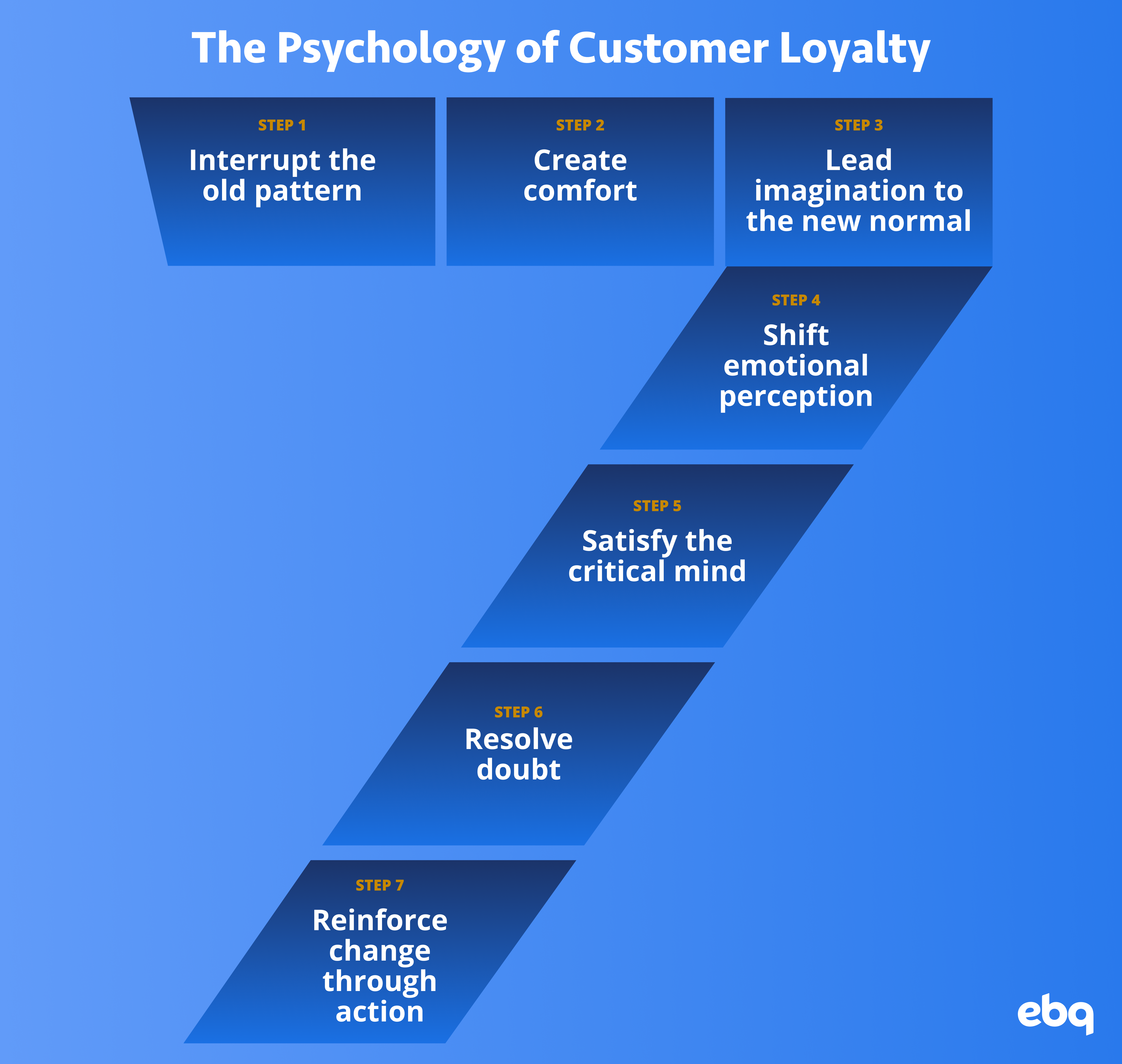
Branding specialists have identified a seven-step process for changing consumer behavior and fostering brand loyalty, with each step triggering a psychological response that moves people from awareness to lasting connection.
- Interrupt the old pattern: By disrupting the usual flow, you can create a moment of heightened awareness that makes people more receptive to new messages, products, or experiences.
- Create comfort: By fostering a sense of security and ease, you help prospects feel confident and supported in embracing change.
- Lead imagination to a new normal: By inspiring people to envision a better future with the brand, you guide them toward adopting new behaviors.
- Shift emotional perception: By evoking positive feelings and associations, you deepen emotional bonds that influence loyalty.
- Satisfy the critical mind: By providing clear, credible information, you address clients’ logical concerns and build trust.
- Resolve doubt: By responding promptly and empathetically to uncertainties, you remove barriers that prevent people from committing.
- Reinforce change through action: By consistently delivering on promises and nurturing the relationship, you cement new behaviors and long-term loyalty.
By following these seven steps, BDR outreach can become a powerful driver of long-term customer loyalty. From the very first contact to ongoing engagement, BDRs shape emotional connections and establish lasting trust. By aligning outreach strategies with these psychological drivers, BDRs help brands create meaningful, long-term relationships that stick.

Subscribe to EBQ's Bimonthly Newsletter
Subscribe to EBQ's Bimonthly Newsletter
How to drive customer loyalty
BDRs are uniquely positioned to influence loyalty because they are often the first human touchpoint a prospect has with your brand. The tone, trust, and rapport they establish early on can shape the customer’s perception long after the initial sale, laying the foundation for a lasting relationship.
BDR outreach is one of the most powerful tools for activating the psychological drivers of brand loyalty. Use this seven-step process to guide your approach and create deeper, trust-building connections from the very first interaction.
1. Interrupt the old pattern
A positive first impression can shift their perception from negative to positive, opening the door to new opportunities with your brand. Many prospects expect sales outreach to be pushy or impersonal. But by leading with relevance, empathy, and value, BDRs can break that expectation and create a memorable, trust-building connection right from the start.
2. Create comfort
Comfort builds trust and encourages prospects to engage more openly. When BDRs offer personalized outreach and timely follow-ups, it helps prospects feel seen and respected, making them more likely to reciprocate with interest and engagement. In fact, Salesforce reported that 65% of customers will remain loyal to brands that deliver a more personalized experience. This proves that a human-first approach starts paying off early in the relationship.
3. Lead imagination to a new normal
Use consistent, thoughtful, and personalized outreach to create positive associations with your brand. When prospects repeatedly experience relevance, clarity, and value in your communication, it reshapes their perception, helping them envision a future where your solution fits naturally into their workflow. This emotional shift builds trust early, laying the groundwork for smoother conversions down the line.
4. Shift emotional perception
Prospects often approach with hesitation, skepticism, or uncertainty because sales are often associated with pressure, persuasion, and self-interest. By engaging with empathy and emotional intelligence, BDRs can turn doubt into trust, easing concerns and positioning your brand as a reliable, caring partner from the very first conversation.
5. Satisfy the critical mind
When prospects raise questions or concerns, they want clarity, honesty, and confidence in your brand. Many miss out on this opportunity to provide a deeper level of care. By actively listening and providing thoughtful, informed responses, BDRs demonstrate they take prospects seriously, building trust and setting the stage for long-term loyalty.
6. Resolve doubt
When a client hesitates, it is often because they are unsure whether your brand will deliver on its promises. Whether it is clarifying a policy, troubleshooting an issue, or simply validating a concern, resolving doubt with patience and professionalism builds confidence and keeps people moving forward with your brand.
7. Reinforce change through action
Trust is not built in a single moment. It is earned over time through consistent, reliable action. By continuing to follow through on promises, anticipating needs, and checking in proactively, your team shows that clients can depend on you, gradually turning satisfaction into loyalty. Proper onboarding plays a critical role in reinforcing this trust, ensuring clients feel supported, informed, and confident from the very start.
By thoughtfully applying these steps, BDR outreach evolves from simple lead generation into a strategic advantage, one that sparks emotional connection, nurtures long-term loyalty, and contributes directly to pipeline growth and revenue.
Effects of brand loyalty
Brands want loyal customers because loyalty leads to consistent revenue, higher average lifetime value, and lower marketing costs. Loyal buyers come back more often, are more likely to try new offerings, and do not need as much convincing to stick around. According to a report from BIA Business Services, returning buyers spend 67% more, on average, than new ones.
Loyalty is invaluable for businesses. It is estimated that the cost of obtaining a new client is five to 20 times that of retaining an existing one. Furthermore, when they already trust your business, clients tend to be more receptive to new offerings, events, and promotions more quickly than new clients.
Beyond financial value, loyalty strengthens a brand’s position in the market. Because clients often feel an emotional connection, loyalty gives brands a competitive edge that is hard to replicate. Loyal businesses are also more likely to recommend the brand to others, offer useful feedback, and stay supportive for the long term.
The Essential Guide to Sales Pipeline Management
Learn our strategic approach to tracking prospects throughout the pipeline, forecasting revenue, and closing more deals.
EBQ: Creating Brand Loyalists from First Touchpoint
To turn prospects into loyal advocates, BDRs must deliver consistent, high-quality outreach backed by a genuine, personalized human touch. When prospects feel seen, heard, and valued from the first conversation, they are far more likely to engage, convert, and become brand advocates.
If you want to boost your brand’s pipeline and reputation through thoughtful, relationship-driven outreach, EBQ’s Business Development specialists seamlessly support your sales team with flexible, fractional services tailored to your business. We help you build client trust, accelerate deals, and drive lasting loyalty — all with minimal overhead to fuel your growth.
About the Author:
Dalia is EBQ’s VP of Business Development with over 10 years of experience in customer service. After forming the Customer Experience division, she achieved over $1.2M in revenue within the first six months under her leadership.